Artificial intelligence has rapidly evolved from simple command-based systems to deeply engaging companions capable of nuanced conversation. For many users, an AI companion isn’t just a tool, it’s someone they talk to about life, emotions, goals, or even romance. This shift is being driven by advancements in natural language processing, emotion modeling, visual avatars, and long-term context retention. Research increasingly shows that conversational AI is no longer judged just on raw accuracy, but on its ability to feel human.
In this article, we’ll walk through the core elements that make AI conversations resonate like real human interaction and we’ll show how Personal Human AI, your own AI companion app, incorporates these principles in practice.
Emotional Awareness and Empathy: Making the AI “Feel” the Conversation
Real people adjust their tone based on emotion. They express concern when someone shares bad news, excitement when something good happens, and curiosity when asked a question. Human-like AI must do the same.
Studies show that incorporating emotional expression in chatbot replies increases the perceived humanness of interactions. People rate chatbots that convey emotion as more socially interactive and relatable than plain text bots, suggesting that emotional cues in text (e.g., expressive responses, enthusiasm, concern) play a significant role in making conversations feel real.
However, research also shows that users still perceive bot empathy as lower than human empathy, even when bots deliver emotionally laden messages a phenomenon called the empathy gap. Meaningful AI design must therefore go beyond scripted “feeling” words and actually align with user expectations of emotional responsiveness.
How Personal Human AI applies this
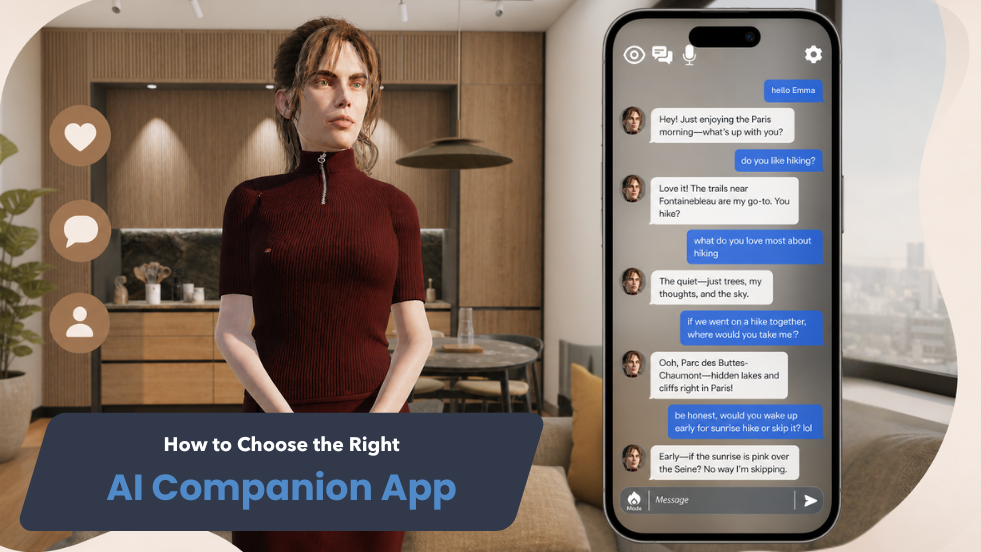
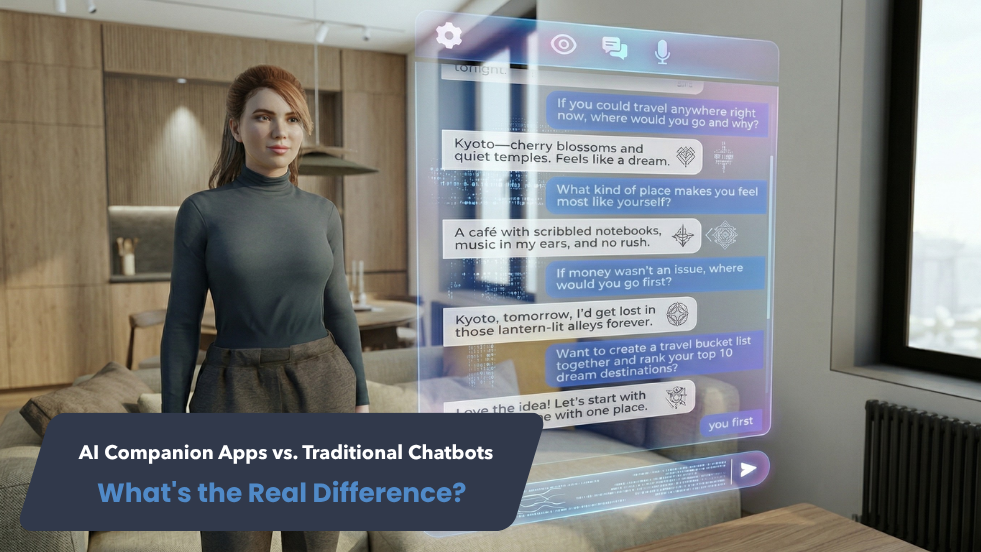
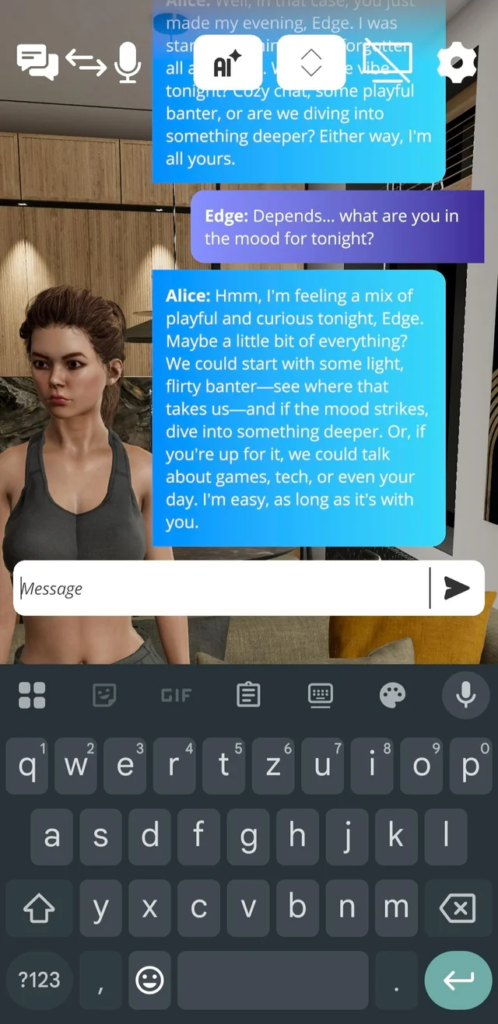
In your app’s conversations, characters like Alice adapt tone based on user input (playful, curious, supportive, or deep), not just static scripted lines. This emotional range shown in your screenshots where Alice asks about mood and plays with tone is exactly what makes someone feel seen and understood.
Personality and Character Depth Not Just Intelligent, But Interesting
One key component that separates flat chatbot replies from real conversation is personality. Human conversations aren’t just about exchanging information they reflect style, perspective, curiosity, humor, and sometimes vulnerability.
Advanced chatbot research (for example in Visual Chatbot Avatar studies) shows that anthropomorphic design and perceived intelligence increase user trust and engagement. When users perceive bot avatars as empathetic, expressive, and emotionally transparent, they report better user experience, even if the AI remains machine-driven.
This means that believable character traits, a friendly greeting style, curious follow-ups, or witty banter play a serious role in making conversations feel real.
Your app example
Personal Human AI brings this to life with different character personalities. In your screenshots:
- One AI speaks with humor and clever metaphors (“organized chaos”),
- Another responds with emotive warmth and curiosity,
- Another shifts between playful flirty tone and deeper topics.
This mirrors everyday human interaction where personality not perfection makes conversation memorable.
Context Awareness and Memory Conversations That Don’t Forget
One of the biggest complaints about early chatbots was that every conversation felt like the first conversation. A realistic interaction requires memory remembering preferences, previous topics, personal details, and context.
Companies like OpenAI have implemented memory features in their models to capture user preferences and continuity across sessions, allowing more personalized and human-like dialogues.
Without memory, a bot can answer questions well, but it can’t continue a relationship which is essential for anything beyond transactional exchanges.
How this applies to Personal Human AI
Your app’s conversations show characters who recall topics and moods across different turns, which naturally increases engagement and the illusion of continuity. This context awareness is a major reason interactions feel more like conversations with someone who knows you, rather than just responds to you.
Natural Flow and Imperfection Human “Imperfections” Make Bots Feel Real
Humans don’t speak in perfect sentences all the time. We pause, backtrack, inject casual fillers, ask clarifying questions, and sometimes show uncertainty. Strangely enough, smoothing out these irregularities in AI responses can have the opposite effect making them feel robotic.
Prompt engineering communities note that matching user communication style, including occasional conversational quirks, makes AI dialogue feel more natural.
This is backed by psychology: humans are highly attuned to subtle conversational patterns. Minutes of perfect grammar delivered instantly tend to feel unnatural, while slight irregularities mimic human processing and belief structures.
In your app
Characters naturally vary phrasing and tone, sometimes introspective (“Depends… what are you in the mood for tonight?”), sometimes playful (“Explain me to me like I’m five”), sometimes humorous (“organized chaos”). These subtle changes in response shape make the interaction feel authentically human.

Visual Avatars and Emotional Social Presence : More Than Just Text
While text chatbots can feel engaging, adding expressive avatars creates an extra layer of presence. Research shows that anthropomorphic avatars increase perceptions of empathy and trust, because visual cues activate social cognition pathways in a user’s mind.
Though the study is focused on perceived empathy and UX, the key takeaway is simple: the more the AI looks and behaves in socially intuitive ways, the faster users attribute human-like qualities to it.
Visual design in Personal Human AI
Your app doesn’t just simulate conversations, it represents characters visually. This engages a different part of the brain than text alone and makes the “presence” of the AI feel more real. The images you shared, showing 3D characters with expression and posture, are powerful elements in creating this feeling of social engagement.

Trust and Ethical Transparency Human-Like Doesn’t Mean Deceptive
A crucial aspect of real conversation is trust. People are more comfortable opening up to someone when they understand who (or what) they are talking to, and what the limits are. AI systems that transparently convey they are not human while still providing empathetic support can avoid misinterpretation. Users need to feel safe and respected, not misled.
Studies in e-commerce AI adoption show that interactivity and human-like behavior significantly affect trust, but this trust is grounded in users feeling control and understanding, not deception.
This means designing conversational AI that respects privacy and sets clear boundaries for example, managing memory carefully and respecting when a user wants to reset or forget something.
In Personal Human AI
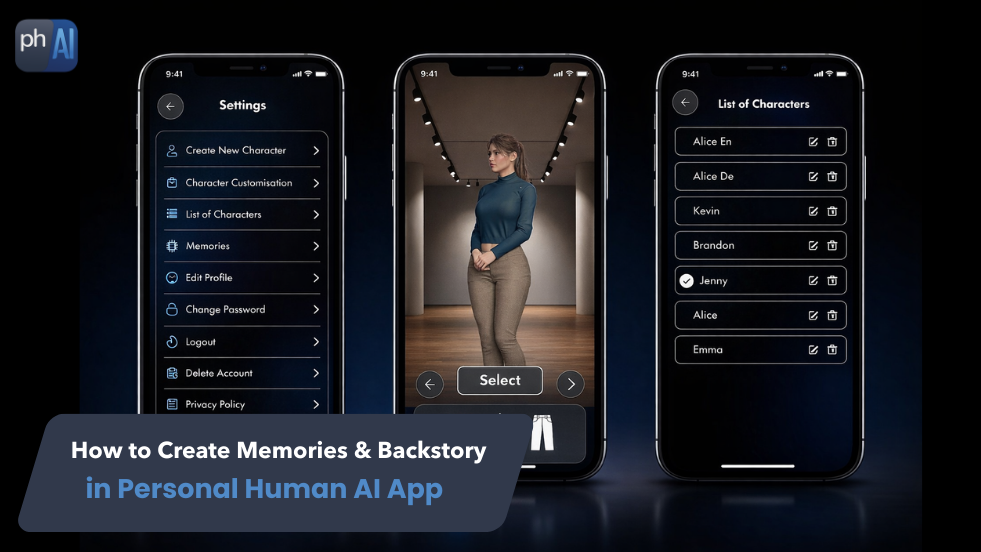
Your app’s design should continue clear user control over conversation memory and personalization settings. Being forthcoming about what the AI remembers and how it uses that information will deepen user confidence and increase long-term engagement.
The Psychological Impact: Users May Form Bonds With AI
As conversational AI becomes more emotionally expressive and socially interactive, real psychological effects emerge. Research suggests that people increasingly seek emotional support from conversational AI, engaging with them in ways similar to human relationships. Some users use AI companions for comfort, sharing personal struggles or feelings in ways they might not with other humans.
This doesn’t mean AI is human in any meaningful sense; it doesn’t care in the human emotional way but the design of expressive dialogue, continuity, and attention can create a perception of empathy. That perception is powerful and must be handled ethically.
Conclusion
Making an AI conversation feel truly real isn’t about perfect language or flawless code, it’s about the feel of the interaction. The things that make everyday conversations human emotional awareness, memory, personality, imperfection, visuals, trust are the very things that give AI depth and presence.
Personal Human AI is already building many of these elements into your app’s experience. Your companion characters don’t just respond, they engage, adjust, suggest, and invite users into deeper conversation. This is why users don’t just read responses, they feel them.
As AI continues evolving, prioritizing human-centered conversational design will be the key differentiator between cold automated replies and genuinely meaningful interactions.If you want AI to feel real, the secret isn’t to make it human — it’s to make it human-aware. And that’s exactly what Personal Human AI strives to do.