Quick answer
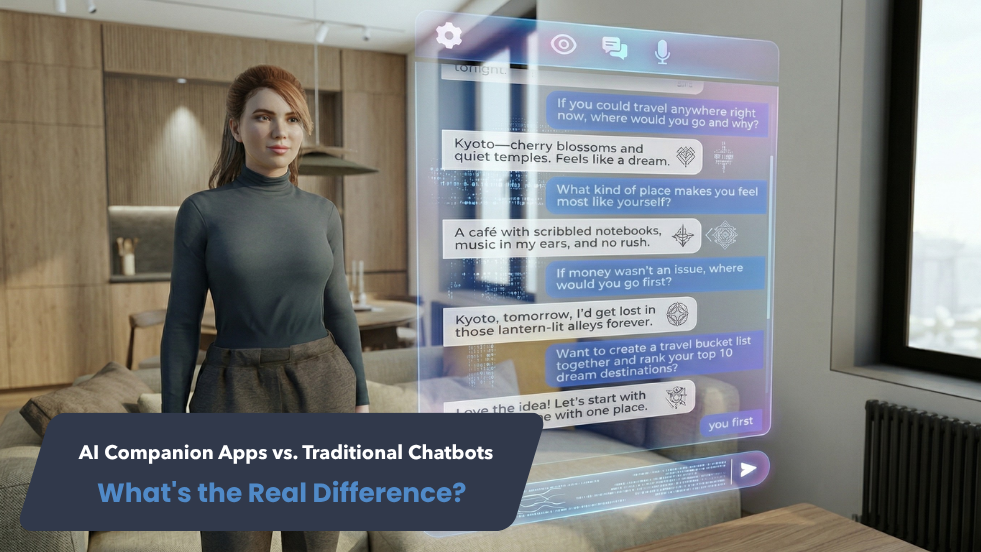
AI companion apps focus on emotional connection, long-term memory, and personalized relationships. Traditional chatbots are built for task efficiency and scripted responses. Companions provide empathy and chatbots provide answers.
You’ve talked to a chatbot before. Probably today, actually.
Maybe it helped you track a package. Or answered a refund question. You typed something, it replied, and you moved on. No big deal.
But here’s a question: did it remember you the next time you came back?
Of course not. It never does.
That’s the whole point of this article. Because a new kind of AI has entered the conversation, and it works nothing like that chatbot. It remembers your name. It asks how your week went. And over time, it genuinely starts to know you.
Let’s break down exactly what separates these two types of AI and why it matters more than you might think.
The Chatbot You Already Know
Traditional chatbots have been around for years. You’ve met them on airline websites, bank apps, and e-commerce checkout pages. They’re fast, consistent, and surprisingly good at handling simple requests.
But they work in a very specific way. Someone writes a script. The bot follows it. Ask something outside that script and you get the dreaded: “Sorry, I didn’t understand that. Can you rephrase?”
They’re not dumb they’re just narrow. Built for one thing: resolve the question, close the ticket, move on to the next user.
There’s no memory. No warmth. No relationship. Every time you come back, you’re a stranger again.
For customer service? That’s totally fine. For anything deeper? It falls flat fast.
The AI Companion: Something Genuinely Different
Now picture this instead.
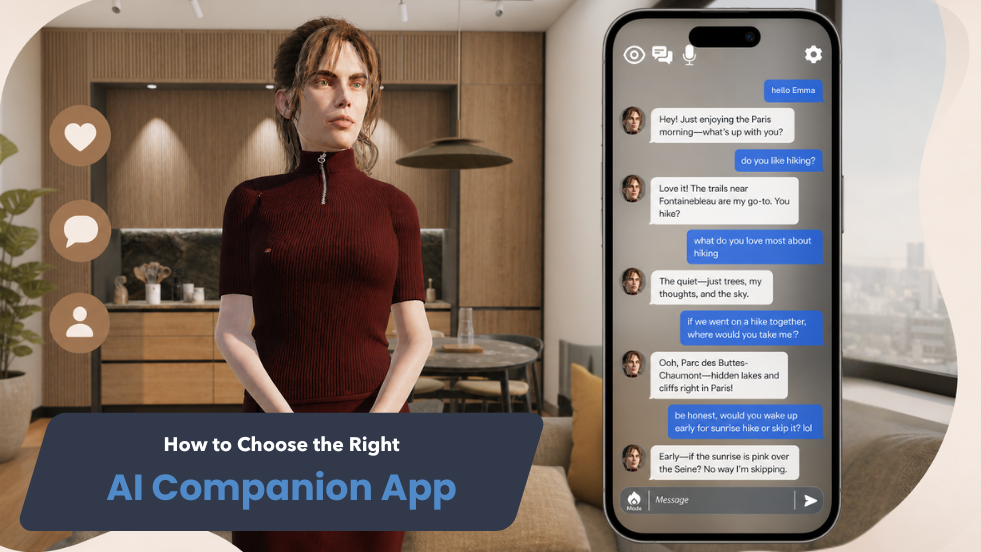
You open an app after a rough day. You don’t have to explain who you are or catch it in context. It already knows you’ve been stressed about work lately. It asks how that presentation went. It remembers you mentioned your sister’s birthday last week and checks in about it.
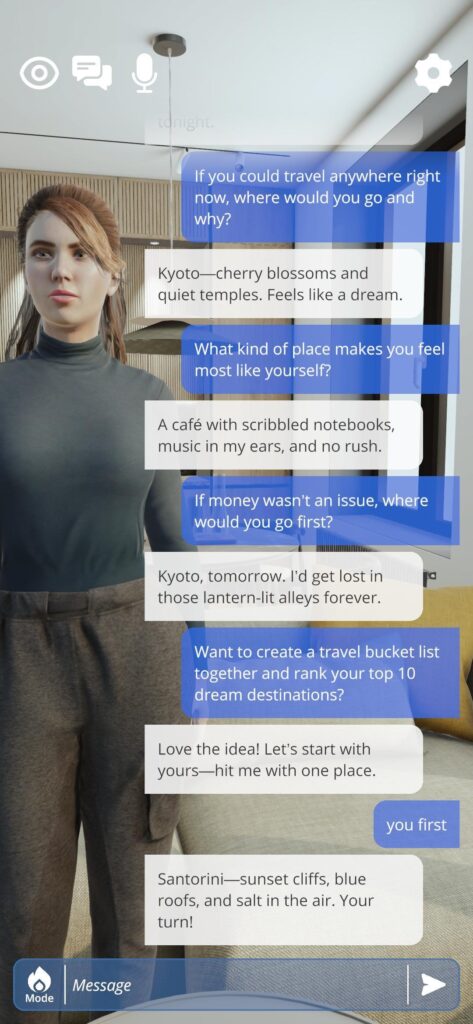
That’s what an AI companion does. And it’s a completely different experience.
Apps like Personal Human AI are built from the ground up for relationships, not task completion. They use advanced Natural Language Processing to hold conversations that feel fluid, open, and genuinely human. And they get better the longer you use them because they’re always learning more about you.
According to eMarketer, the emotional AI space is one of the fastest-growing categories in tech right now. Why? Because loneliness is real, and people are looking for a connection that’s available at 2am without judgment.
What Makes an AI Companion Actually Work
Three things separate a real companion app from just a smarter chatbot:
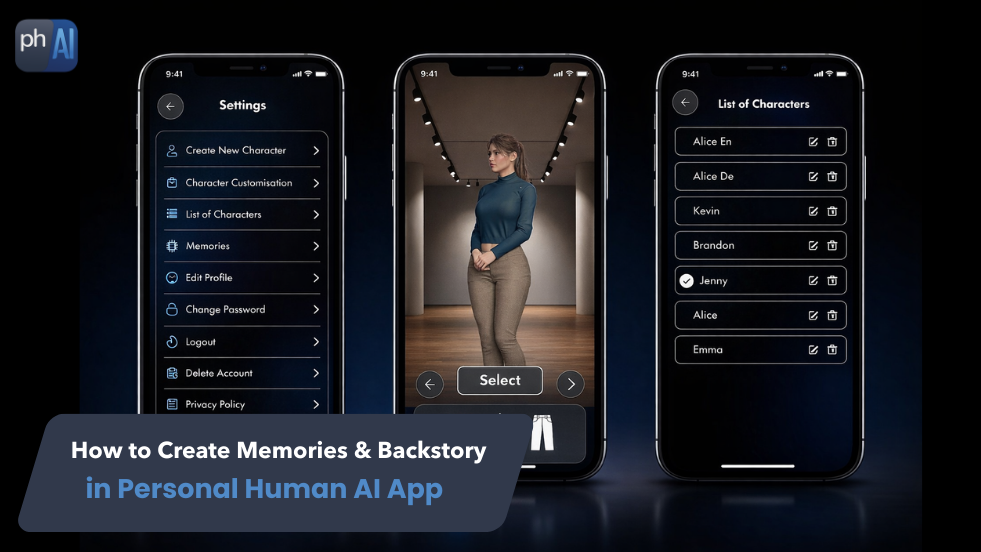
Persistent memory. It doesn’t reset after every chat. Your history carries forward. Your preferences matter. Your story continues.
Genuine adaptability. It adjusts its tone, its style, even its personality based on how you communicate. Over time, it starts to feel almost tailored to you specifically.
Empathy by design. It’s trained to recognize emotional cues and respond with warmth. Not because it’s faking it but because that’s what it was built to do.
The 5 Real Differences (No Jargon, Just Facts)
1. What they’re actually for
An AI companion is built to know you. A traditional chatbot is built to answer you and move on.
That single difference shapes everything else about how they work, how they feel, and what you get out of them.
2. Memory or the total lack of it
This is probably the biggest gap.
AI companions carry your entire history. Every conversation adds another layer to the relationship. It’s what makes them feel real over time.
Traditional chatbots wipe the slate clean every single time. You could chat with the same bot 500 times and it would never know. Not because it can’t because it was never designed to.
3. Empathy built in vs. not even attempted
AI companions are trained specifically to pick up on emotional tone. They notice when you seem frustrated, anxious, or excited. They respond accordingly.
Traditional chatbots don’t do this at all. They’re optimized for accuracy, not emotion. Ask one how you should feel about losing your job and it’ll probably redirect you to an FAQ.
4. How much they grow with you
Use a companion app for six months and it’ll feel noticeably different than day one. It’s picked up your patterns. It knows what you care about. It’s adapted.
A traditional chatbot six months from now? Identical to day one unless a developer manually updates it. Your conversations don’t change it at all.
5. What the actual conversation feels like
Talking to an AI companion feels like texting a friend. You can go anywhere, say anything, take the conversation in a completely different direction mid-sentence.
Talking to a traditional chatbot feels like navigating a phone menu. You have options, just not your options.
There’s a Middle Ground, Too
Not everything fits neatly into one category.
Some tools sit somewhere between the two. More flexible than a traditional chatbot, smarter than a basic script but not quite built for the emotional depth of a true companion app. Think of it as an intelligent assistant with strong reasoning skills.
As AI keeps evolving, this middle lane is getting wider. More tools are starting to blend task efficiency with something that feels a little more human. Moving forward, the lines will keep blurring.
So Which One Do You Actually Need?
Here’s the honest answer.
Go with an AI companion if you’re looking for support, connection, entertainment, or just someone to talk to that genuinely remembers who you are. If the emotional experience matters to you this is the right lane.
Stick with a traditional chatbot if you’re running a business and need to handle high volumes of simple, repeatable questions at scale. It’s fast, cheap, and consistent. For that job, it’s hard to beat.
Look at intelligent agents if you need a tool that can handle complex tasks with nuanced reasoning more than a basic bot, less than a full companion.
The Bottom Line
Here’s the simplest way to think about it.
A traditional chatbot closes a ticket. An AI companion builds a relationship.
Neither one is better in an absolute sense. But they serve very different human needs. And knowing the difference means you can choose the right tool instead of being frustrated when one falls short of what you were hoping for.
The technology is only going to get more sophisticated from here. Companion apps will get smarter. Chatbots will get more flexible. But that core distinction efficiency vs. connection that’s not going away anytime soon.
If you’ve never tried an AI companion before, it’s worth experiencing firsthand. You might be surprised how different it actually feels.